What Most Tourist Underestimate on the Emerald Coast
Don’t Underestimate the Gulf: What Every Emerald Coast Visitor Should Know About Rip Currents
The Emerald Coast of Florida is famous for its sugar-white sand and stunning emerald-green water. At first glance, the Gulf of Mexico often looks calm, inviting, and even gentle. But looks can be deceiving.
Every year, visitors underestimate the power of the Gulf — especially rip currents — and that mistake can turn a perfect beach day into a dangerous situation. Our goal is simple: we want you to enjoy your vacation and make it home safely.
The Gulf of Mexico Is Powerful — Even on Calm Days
One of the most common misconceptions visitors have is assuming calm water means safe water. The truth is, rip currents can form even when the Gulf looks flat and peaceful.
Tides, underwater sandbars, weather changes, and boat traffic can all create strong currents quickly. What may be waist-deep and calm one moment can become unexpectedly powerful the next — especially along the Emerald Coast.
What Is a Rip Current?
A rip current is a strong, narrow channel of water that flows away from the shore, pulling water back out to sea. These currents don’t pull you under — but they do pull you away from shore, often faster than even strong swimmers expect.
Rip currents are one of the leading weather-related causes of rescues and drownings along Florida’s Gulf Coast.
How to Spot a Rip Current
Before entering the water, take a moment to scan the shoreline. Signs of a rip current may include:
A noticeable break in the wave pattern
Darker-colored water indicating deeper channels
Water that looks choppy, foamy, or moving differently
A line of seaweed, debris, or foam moving away from shore
If something looks “off,” trust your instincts and avoid that area.
What to Do If You’re Caught in a Rip Current
If you ever find yourself caught in a rip current, remember this:
Don’t panic. Don’t fight it.
Instead:
Stay calm and float to conserve energy
Do not try to swim straight back to shore
Swim parallel to the shoreline until you are out of the current
Once free, swim back to shore at an angle
If you can’t escape, float or tread water and wave for help
Rip currents are typically narrow — swimming parallel is key.
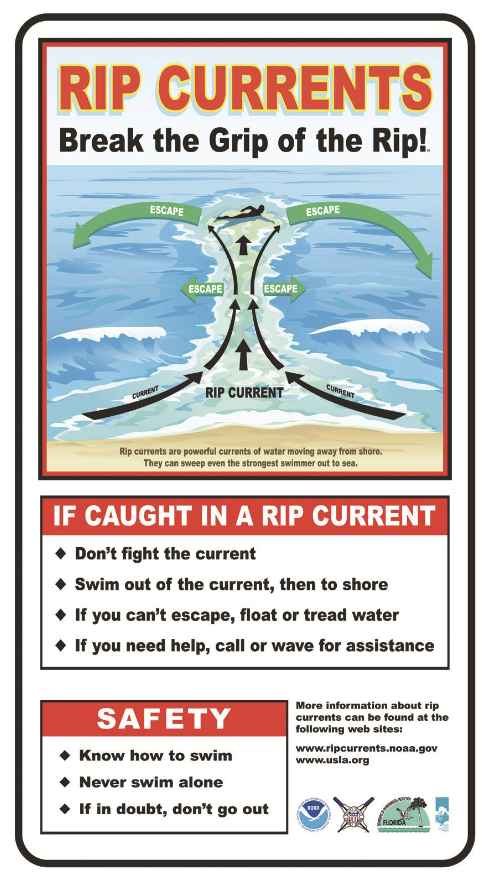
Rip Current Information
Pay Attention to Beach Flags and Local Warnings
Beach flag systems exist for a reason. Along the Emerald Coast:
🟢 Green Flag: Low hazard, but caution still advised
🟡 Yellow Flag: Moderate surf and currents
🔴 Red Flag: High hazard — strong rip currents
⚫ Double Red Flags: Water closed to the public
If red flags are flying, stay out of the water. Even experienced swimmers can be overwhelmed.
Always Be Aware — Conditions Can Change Fast
The Gulf of Mexico is dynamic. Tides shift, currents strengthen, and weather changes rapidly. Even standing in waist-deep water can become dangerous if a strong current forms.
This is especially important for:
Children
Weak or tired swimmers
Visitors unfamiliar with Gulf conditions
Never turn your back on the water, and avoid swimming alone.
Enjoy the Emerald Coast — and Respect the Water
We love welcoming visitors to the Emerald Coast, and we want you to make incredible memories here. The Gulf is beautiful, powerful, and deserving of respect.
A little awareness goes a long way. Take the extra moment to check conditions, watch for rip currents, and follow local safety guidance — so your beach days end with sunsets, not rescues.
Come enjoy our beaches. Just remember: admire the Gulf’s beauty, but never underestimate its strength.
Stay safe, and have a wonderful visit to the Emerald Coast